
FOR PATIENTS
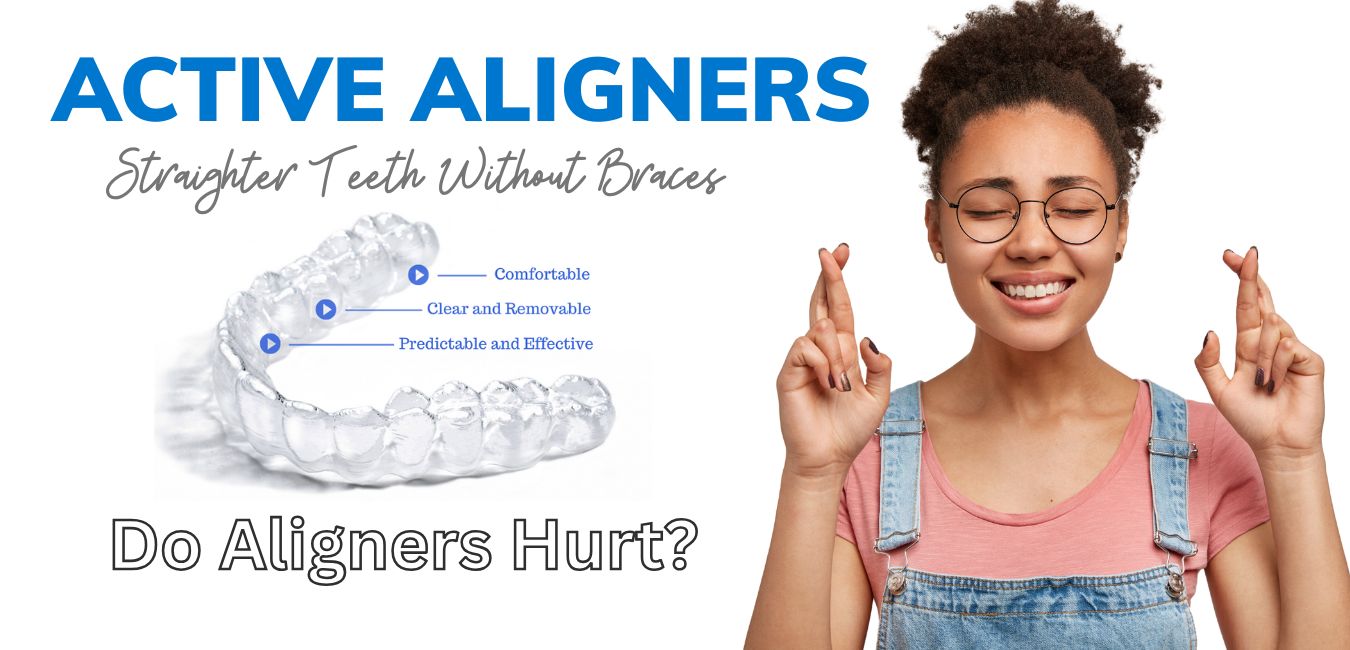
Do clear aligners hurt?
If you are considering clear aligners to straighten your teeth, one of the first questions you will probably ask is, do clear aligners hurt?
It is a fair concern. Any treatment that moves teeth will create some sensation, but for most patients clear aligners are far more comfortable than they expect. Here is an honest, dentist-led explanation of what you are likely to feel during Active Aligners treatment, and what is completely normal.

THE SHORT ANSWER
Pressure, not pain
Clear aligners do not usually hurt, but you will feel pressure. That pressure is the sign that your teeth are moving as planned. Most patients describe it as tightness, mild discomfort, or a dull ache for a day or two. Severe pain is not normal and should always be checked by your dentist.
Tightness
A snug, firm feeling as a new set begins guiding your teeth.
Mild discomfort
Noticeable but manageable, and easy to settle into within a day.
A dull ache
A gentle, short-lived ache for a day or two that eases as you adapt.
Why aligners feel tight at first
Clear aligners work by applying gentle, controlled pressure to guide your teeth into better positions over time. You are most likely to feel that pressure when you start your first aligner and when you change to a new set.
Active Aligners are made from a medical-grade tri-layer material: firm outer layers that hold their shape and a soft, springy core. That core flexes to deliver a gentler, more continuous force across each stage of wear, which is part of why the feeling stays manageable rather than sharp. The sensation usually peaks within the first 24 hours, settles within 1 to 2 days, and becomes easier as your mouth adapts. Many patients say it is more noticeable at night or first thing in the morning, but manageable throughout.
Are aligners more comfortable than braces?
For most patients, yes. Because aligners move teeth gradually and in planned stages, discomfort is typically milder and shorter-lived. Compared to traditional braces, clear aligners offer real comfort advantages.
- No wires or brackets to rub against your cheeks or lips
- Fewer mouth sores during treatment
- Removable, which helps with comfort and hygiene
Do attachments hurt?
Some patients need attachments: small, tooth-coloured shapes bonded to certain teeth to help guide movement. Attachment placement is painless. They may feel slightly rough at first, and your lips and cheeks usually adjust within a few days. Attachments do not cause pain, though they can make aligners feel tighter initially, which is normal.
What is IPR, and does it hurt?
During some clear aligner treatments, your dentist may recommend IPR, which stands for interproximal reduction. IPR simply means creating a very small amount of space between certain teeth so they can move into better alignment.
- The amount of tooth structure reduced is minimal, usually no more than 0.5 mm
- It only affects the contact points between teeth
- It does not change the appearance of your teeth
- It helps achieve better alignment without unnecessary tooth tipping
For most patients, IPR is painless. The reduction is extremely small, and many patients feel little to no sensation. If the gums are sensitive, your dentist can use a topical anaesthetic to keep you comfortable. Because IPR is carefully planned and performed by a dentist, it is a safe, controlled and comfortable procedure. Most patients are surprised by how quick and easy it feels.
Living with your aligners day to day
Speaking
You may notice a slight lisp for the first few days. This almost always disappears as your tongue adapts.
Eating and drinking
You remove aligners to eat or drink anything other than water, so there are no food restrictions, no pressure while chewing, and easier oral hygiene than with braces.
Work, social life and sport
Clear aligners are popular with adults and teens worldwide because they are discreet and easy to fit into busy lifestyles.
Tips to stay comfortable
A few simple habits keep treatment as comfortable as possible. Your dentist may recommend:
- Changing aligners at night, so you sleep through the initial tightness
- Using mild pain relief if needed, avoiding anti-inflammatories unless advised
- Wearing aligners consistently, 20 to 22 hours a day, to prevent extra discomfort
- Cleaning aligners properly to avoid irritation
Consistency actually makes treatment more comfortable, not less.
When discomfort is not normal
Contact your dentist if you experience any of the following.
- Sharp or severe pain
- Pain that does not improve after a few days
- Sores that worsen instead of healing
- A sudden change in your bite
This is why dentist-led aligner treatment matters. You are never left guessing.
DENTIST-LED CARE
Why dentist-led care makes a difference
With Active Aligners, your treatment is planned by a qualified dentist supported by an international team of orthodontists, monitored throughout the process, and adjusted if your teeth are not tracking perfectly. This keeps tooth movement safe, comfortable and predictable at every stage.
The bottom line
Clear aligners may feel tight at times, but they should not be painful. Most patients find Active Aligners easier than expected, far more comfortable than braces, and simple to fit into everyday life.
Ready to start?
If you want honest answers about comfort, timelines and results, the best place to start is a consultation. Find an Active Aligners provider near you and book with confidence.