
PATIENT GUIDE
Patient instruction booklet
Everything you need to wear, care for and get the best results from your Active Aligners, from how they work to inserting, removing, cleaning and retention.

WELCOME
Getting started
- Wear each set of aligners for 22 hours a day, every day, for 14 days per set, teeth quickly return toward their original position, so full-time wear matters
- Switch to your next set on a chosen day every second week
- If your aligners were out for an extended period, contact your dental professional (or, if comfortable, extend the current set by the time they weren’t worn)
- Remove them to eat, to drink anything except water, and to clean your teeth, coloured, fizzy or sugary drinks can stain the aligners and harm your teeth
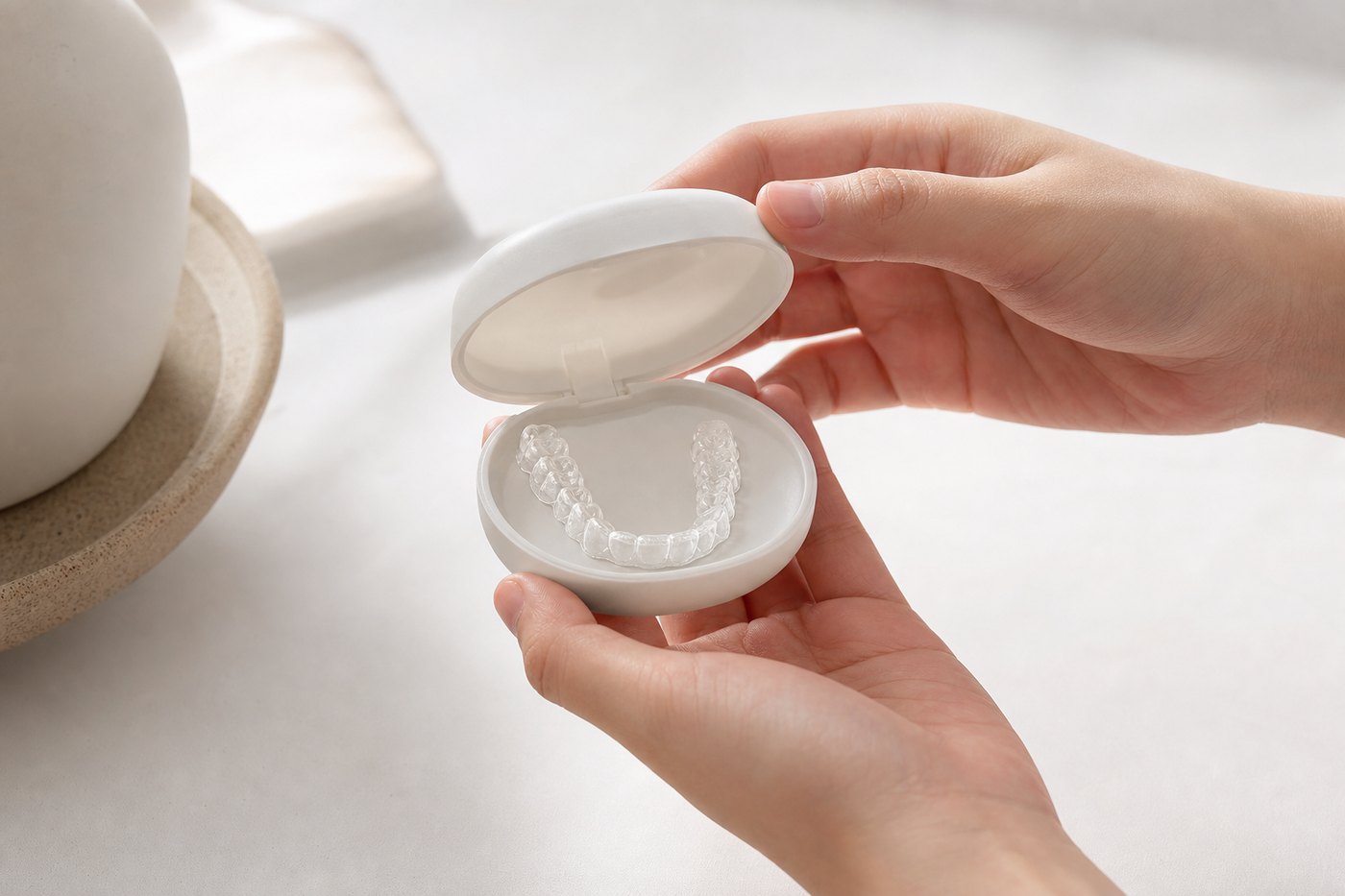
- Store them in their protective case whenever they’re not in, clear aligners aren’t safe in a tissue and may incur a replacement fee if lost
Active Aligners move teeth through orthodontic tooth movement, controlled, gentle force over time. Each set is engineered with precise pressure points to push specific teeth in specific directions (rotate, forward, backward, or vertically). The force stimulates the periodontal ligament and surrounding bone, triggering bone remodeling: osteoclasts resorb bone on the pressure side while osteoblasts build new bone on the tension side, allowing the tooth to move. Each set is typically worn for two weeks, gradually moving the teeth to match the aligner; you then switch to the next set, continuing toward the final positions until the series is complete. Visit your dentist if an aligner doesn’t fit, breaks or is lost, or if an attachment falls off.
WEARING YOUR ALIGNERS
Putting them in and taking them out
- Wash your hands; rinse new aligners in cold water
- Match upper aligners to top teeth and lower to bottom, following the numbered sequence in the box (each is embossed with its stage number)
- Gently push over the front teeth, then apply equal fingertip pressure to the back teeth until they snap into place
- Use a chewie to close any air gaps, bite from one side of the mouth to the other until you’ve bitten with all your teeth; use it every time you reinsert
- Don’t bite your aligners into position (it can damage them); if you feel sharp pain, stop and contact your dental professional
- Be patient and gentle. On one side, use a fingertip or the removal tool on the inside of your back molar to slowly pull the aligner from the back
- Repeat on the other side before trying to remove it completely
- Once disengaged from both back molars, work forward, gently prying it away from your teeth
- If a tight seal forms from saliva, blow your cheeks outward or swish water to break it
- Rinse with water, shake off the excess and store in your carry box. Take extra care with multiple attachments; never use excessive force or sharp objects, consult your dental professional if removal is very difficult
EVERYDAY CARE
Caring for your aligners
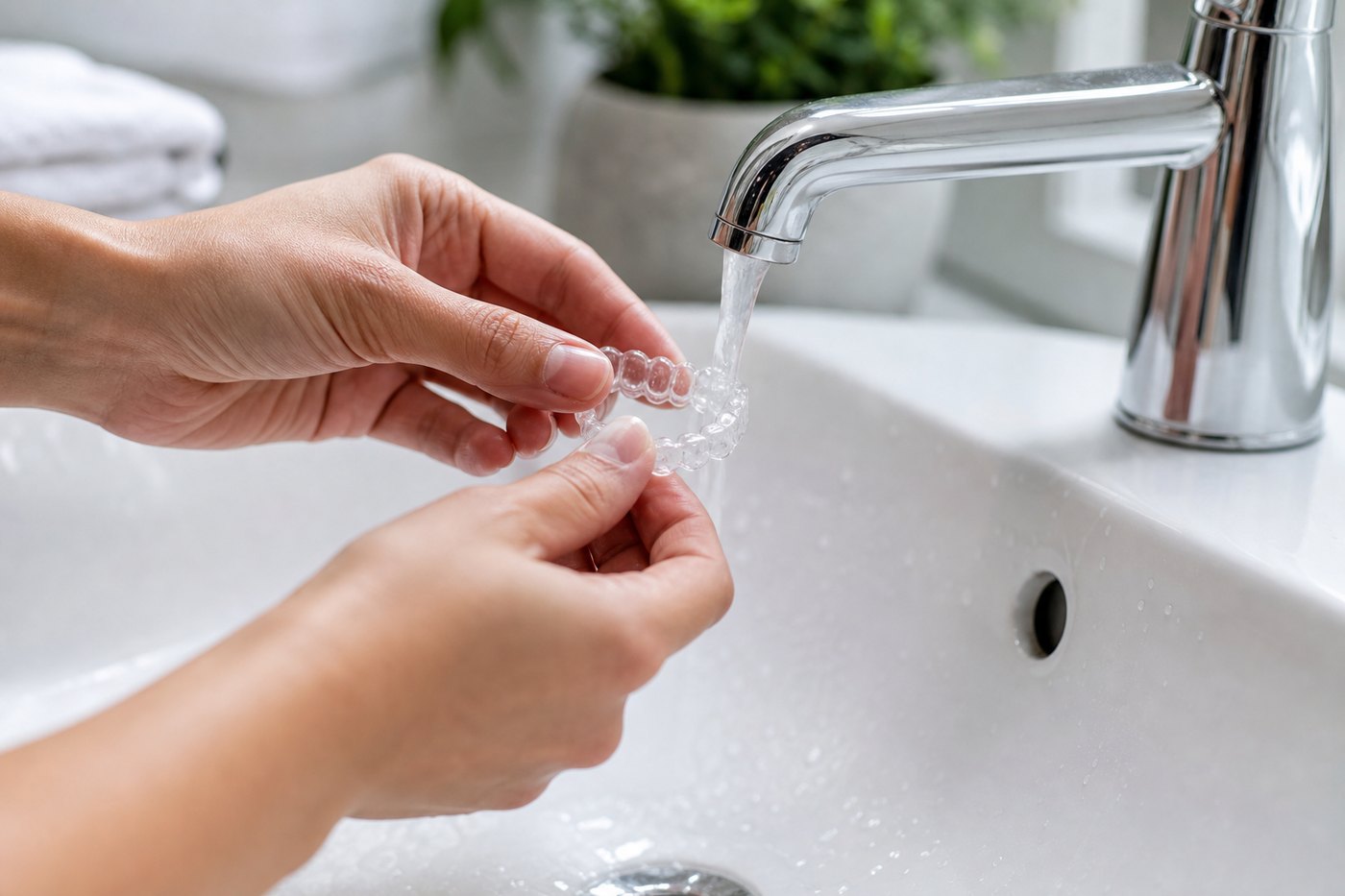
- Clean them every morning and night when you brush, using a soft-bristled toothbrush, cold water and a little soap (dishwashing liquid, aligner/denture cleaner or cleaning foam). Clean the outside while wearing them, then take them off to clean the inside. Don’t soak them in mouthwash (it can stain them); avoid hot water (it can denature the plastic and alter the fit)
- Rinse them under the tap each time you take them out and before reinserting
- Ideally clean your teeth after eating or drinking (other than water); if you can’t, swish water around your mouth to remove food and residue
- You can use an aligner cleaner or white denture tablet to reduce odour from normal bacteria, not essential, but a good habit
- Don’t leave aligners in the sun or direct heat, which can warp them
WHAT IS IN YOUR KIT
Your accessories
- Protective case, store your aligners when they’re not in
- Lip balm, your lips are part of your smile; use as needed
- Removal tool, hook the aligner toward the molars first, then work to the front
- Chewies (spongy Styrene Copolymer), bite on them each time you reinsert to seat the aligners fully
- Aligner file, gently file down any edge that bothers you
- Cheek retractor, hands-free, for taking the progress photos your dentist requests
YOUR JOURNEY
Progress, check-ups and retainers
Active Aligners treatment is 100% compliance-based. Each new set initiates a new tooth movement, which may bring a few days of tenderness (an over-the-counter painkiller can help). Good oral hygiene is important, and a hygiene check and clean every 3 to 6 months is recommended during treatment. An aligner tracking app, created by an orthodontist, tracks your daily wear time and reminds you to wear and change your aligners. Fitment: every aligner must fit 100% (snug, no gaps, all attachments engaged), if it isn’t fitting, stop and see your dental professional. Attachments that don’t engage push teeth in the wrong direction; if one falls off, see your dentist and keep wearing your aligners until then. For stubborn teeth, your dentist may advise wearing a stage an extra week.
- When IPR is prescribed at a later stage, if an attachment de-bonds, if there’s an issue that can’t be managed remotely, or when treatment is complete and attachments need removing
- If you have abnormal symptoms (excessive pain, sensitivity to hot/cold) or any trauma or changes to your teeth, gums, mouth or jaw
- No dental, surgical, orthodontic or similar work should be done during treatment
- For a lost or broken aligner, contact your provider (and send a photo), they’ll advise whether to move back or forward a stage, or replace it; keep all aligners until treatment is complete in case you need to backtrack
After treatment you’ll be given a set of retainers to hold the new alignment while the surrounding bone stabilises and remodels. Wear them at least 22 hours a day for 12 weeks (3 months), then move to night-time wear, or have a fixed retainer fitted. Failure to wear retainers, even briefly, can allow your teeth to relapse, retainers are for life.
Ready, set, smile
Wear them, care for them, and enjoy watching your smile come together. Your provider is with you the whole way.