
FOR PATIENTS
Braces vs clear aligners
Until now, not much had changed in orthodontics over the past few decades. Thanks to technology and the advent of both 3D scanning and printing, things are changing fast. These two technologies are breaking down cost barriers and creating opportunities for dentists and orthodontists to provide clear aligners with Active Aligners to their patients.
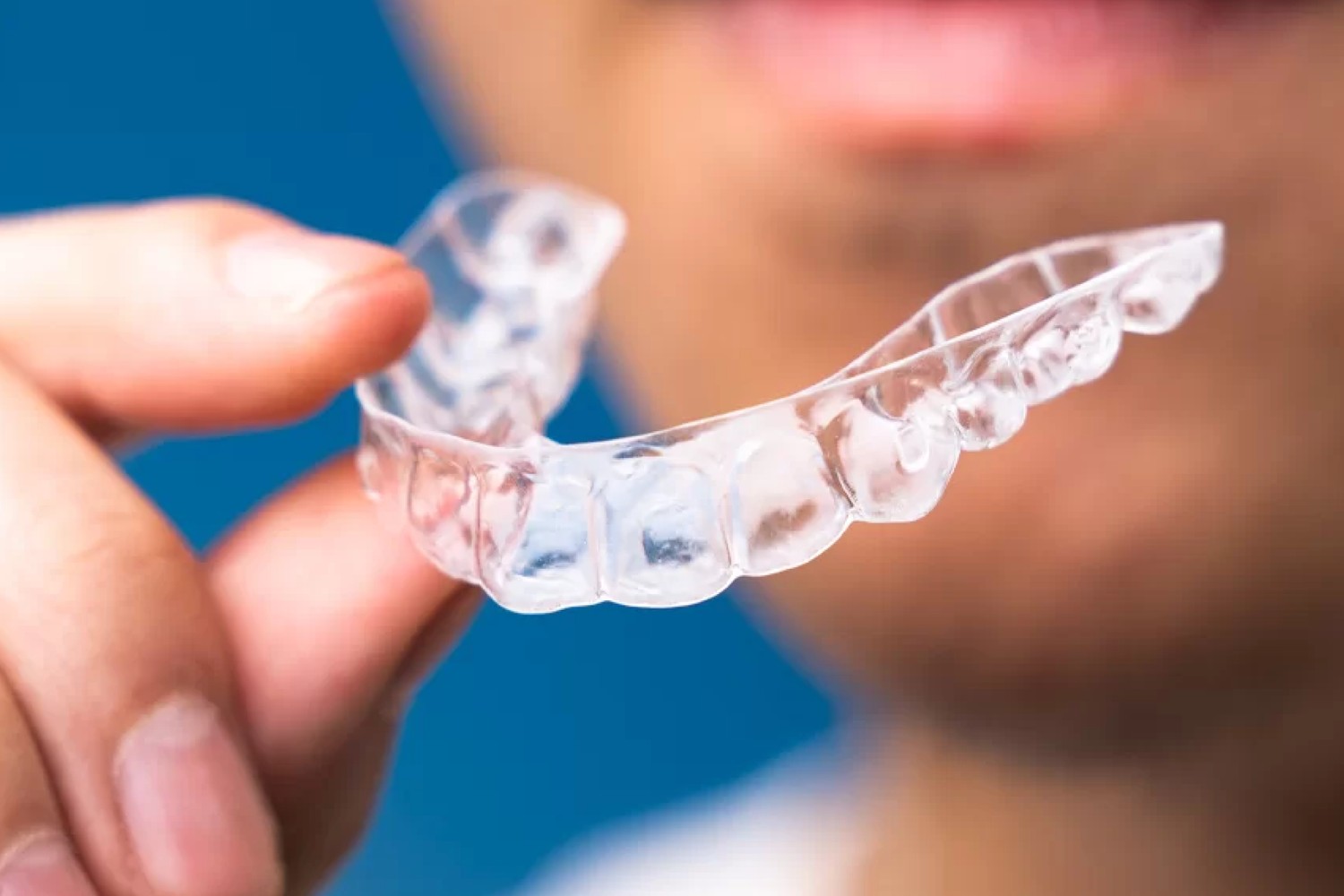
Modern orthodontics becoming accessible
The stigma that once applied to braces and other orthodontic appliances is being erased by high-end aesthetic appliances and treatment modalities that make it easier and more affordable for late teens and adults wanting orthodontic treatment.
Traditional braces vs clear aligners
The aim of orthodontics is primarily to correct poorly positioned teeth to optimize the bite and improve both function and appearance.
Orthodontics was often associated with children. Indeed, very early on in a child’s life, interceptive orthodontics can serve to create necessary space and facilitate the eruption of permanent teeth. However, more and more adults and late teens undergo orthodontic treatment to realign their teeth permanently. The basics of tooth movement is the same in children as it is in adults, and orthodontic treatment can be done at any age.
Reasons some people undergo orthodontic treatment include realigning teeth, correcting an overbite or teeth that sit too high, closing gaps between teeth (diastema) or dental overlap, and preventing premature erosion.
Deciding to have your teeth straightened is always a good idea, and not only to improve the appearance of your smile. Straightening also improves the functioning of the teeth and the jaw muscles in general. A dental disorder exposes patients to a number of complications: an increased number of cavities due to the complexity of cleaning overlapping teeth, fractures in poorly positioned teeth, chronic inflammation of the gums, and temporomandibular joint problems.
There are two main kinds of orthodontic treatment: traditional braces and clear aligners.
AT A GLANCE
How the two treatments compare
Both straighten teeth by applying gentle, controlled force over time. They differ in how they look, feel and fit around daily life. Your treating dentist will recommend the right option for your case.
Active Aligners
- Appearance
Virtually invisible while you wear them - The appliance
A series of clear, custom-made removable trays - Removability
Removable for eating, drinking, brushing and flossing - Appointments
Aligners changed every one to two weeks on average - Cleaning
Oral hygiene stays simple, you just take them out - Range of cases
Treat a wide range of cases, from simple to genuinely complex, dentist-led throughout
Traditional braces
- Appearance
Visible on the front of the teeth - The appliance
Fixed metal or porcelain brackets bonded to the teeth - Removability
Not removable, worn continuously throughout treatment - Appointments
Adjustment appointments every six to eight weeks - Cleaning
Brushing and flossing around wires takes extra care - Range of cases
Can address a very wide range of complex movements
*Average treatment time, varies with case complexity.
Traditional braces
Braces are the best-known orthodontic technique. It is important to know that braces have changed a great deal in recent years and are now more discreet.
Small metal or porcelain brackets are bonded to the front of the teeth and interconnected by an arch wire, the tightness of which may vary, to gradually shift the teeth according to a predetermined plan. This setup applies very slight but steady pressure on the teeth to move them into their optimal position. Sometimes the wire will need to be replaced with a thicker wire to continue shifting the teeth until the desired results are obtained.
Braces correct the position of the teeth both individually and simultaneously.
Once the braces have been fitted, they have to be adjusted in order to maintain the correct degree of tension. Regular follow-up appointments, every six to eight weeks on average, are required to allow the professional to monitor the treatment.
Braces and dental hygiene
Wearing braces requires excellent oral hygiene. Cleaning carefully around the brackets and wires takes more time and attention than usual to keep teeth and gums healthy throughout treatment.
Clear aligners with Active Aligners
Clear aligners are a solution for patients seeking a more discreet orthodontic treatment than conventional braces, as they do not use brackets or wires.
Clear aligners are a modern and near-invisible way to straighten your teeth, and they handle far more than people expect. Active Aligners treat a wide range of cases, from simple crowding and spacing to genuinely complex movements, bites, rotations and previous orthodontic relapse. They align teeth just as braces do, but using transparent, removable trays. The only real exceptions are the rare cases where an aligner physically cannot engage a tooth, like a high, partially-erupted canine or a deeply impacted tooth, and for those few your dentist may suggest a specialist.
Unlike conventional braces, which need adjustment appointments every six to eight weeks, Active Aligners are changed every one to two weeks on average, based on your dentist’s recommendations. Each aligner adjusts teeth according to the plan decided on by a dental professional, by applying the required level of pressure.
In general, orthodontic treatment using clear aligners is faster than with traditional braces. Patient compliance is essential to the success of the treatment. Patients must be disciplined about wearing their aligners as directed to avoid prolonging the treatment or compromising the outcome.
Treatment with clear aligners involves creating a virtual model of the teeth with CAD/CAM technology to show you all of the steps involved, from the initial position of the teeth up to the final desired result.
Clear aligners and dental hygiene
Oral hygiene is easy, since you simply remove the aligner to brush your teeth and floss, then pop it back in.
WHY ACTIVE ALIGNERS
Not all clear aligners are the same
Two aligners can look identical and behave very differently. Three details set Active Aligners apart, and together they help teeth track to plan more reliably.
An extended straight trimline
Active Aligners use a 2 mm extended straight trimline rather than a scalloped edge that follows the gumline. Gripping more tooth structure gives the aligner better retention and a more reliable transfer of force to the teeth. Independent in-vitro research on gingival margin design has examined how trimline shape affects aligner retention.
Reference: Cowley et al., independent in-vitro study on the effect of gingival margin design on aligner retention. Read the study.
A tri-layer shape-memory material
The aligner is made from a medical-grade, tri-layer material: firm, clear outer layers bonded to a soft, springy core. The outer layers hold their shape and express precise force, while the inner layer flexes to deliver that force gently. The result is a longer, more continuous and more comfortable force across each stage of wear.
Positive-pressure thermoforming
Every aligner is positive-pressure thermoformed, not vacuum suck-down. Forming the material under positive pressure captures fine detail at the tooth surface and the gumline, so each aligner fits precisely and works exactly as the plan intends. The stage models the aligners are formed over are 3D printed in our own laboratory and calibrated for accuracy stage after stage.
How Active Aligners are made
What looks like a simple device has fascinating building blocks and processes behind it, all designed to produce quality smile outcomes. The aligner itself is thermoformed over a 3D printed model of each treatment stage, then trimmed, polished and checked before it reaches you.
Ready to start?
Find an Active Aligners provider near you and book a consultation.